.png)
.png)


Commercial Feral Pig Control & Management Services Victoria
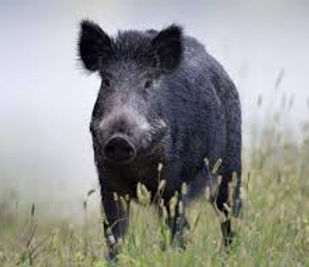
Feral pigs (Sus scrofa) are among Australia's most destructive invasive pest species, causing severe environmental degradation, catastrophic crop losses, and critical biosecurity threats.
Originally introduced as domestic livestock by the First Fleet in 1788, escaped and deliberately released populations have adapted effortlessly to wetlands, forests, and rangelands, now infesting approximately 45% of mainland Australia.
Because feral pig populations can increase rapidly under favorable environmental conditions, immediate, tactical intervention is required to protect regional agricultural assets and sensitive conservation habitats.
The Agricultural, Environmental & Biosecurity Impact of Feral Pigs:
Feral pigs present an expensive, ongoing operational challenge for commercial farmers, land managers, and government agencies alike. Left unmanaged, their behaviors inflict multi-layered damage across regional Victoria:
-
Extensive Crop Destruction & Pasture Degradation: Feral herds systematically destroy mature crops, trample productive pastures, and break down agricultural property fencing.
-
Severe Soil Disturbance & Soil Erosion: Using their snouts to root for food, feral pigs tear up massive swathes of land, destroying native plant root systems, accelerating soil erosion, and facilitating the rapid spread of invasive weeds.
-
Waterway Contamination: Heavy wallowing behaviors directly foul sensitive creeks, dams, and regional water catchments, causing high levels of siltation, erosion, and bacterial contamination.
-
Native Wildlife Predation:Feral pigs prey on native wildlife, including small mammals, birds, reptiles, frogs and their eggs. They also compete with native animals for food, water and shelter, while their rooting, wallowing and trampling can severely degrade habitat and native vegetation.
-
Critical Biosecurity & Disease Risks: Feral pigs can act as reservoirs for endemic diseases and parasites and as potential vectors for exotic diseases. Their ability to move across large areas and interact with livestock creates a significant biosecurity risk, particularly for diseases such as foot-and-mouth disease and African swine fever. An outbreak of an exotic animal disease could cause severe livestock production losses and significant disruption to Australia's agricultural industries and international trade.
Professional, Large-Scale Feral Pig Eradication Programs:
Complete Vertebrate Pest Management (CVPM) delivers licensed, professional feral pig management services throughout Victoria. We develop targeted, data-driven management programs tailored to the terrain, property requirements and level of feral pig activity.
Using systematic monitoring, thermal surveillance, GPS mapping and specialised field equipment, CVPM helps farmers, producers and land managers reduce feral pig populations, protect agricultural assets and minimise environmental damage through integrated pest management.
Control Methods
-
Ground shooting using shotguns
-
Cage Trapping
-
Baiting programs
-
Ground shooting using Centrefire rifles Thermal / Nightvision
.jpg)
.jpg)
Economic & Environmental impacts
Economic impacts
-
The economic impact of feral pigs on Australian agriculture is substantial. While precise, up-to-date national figures can vary, a widely cited estimate suggests they cause over $100 million in direct economic costs to the agricultural sector each year. Some recent regional studies indicate even higher localized costs.
-
Feral pigs are significant predators of newborn livestock, particularly lambs and goats. Studies have estimated lamb losses in semi-arid rangelands due to pig predation ranging from 18.7% to 32%. They can also prey on calves.
-
Pigs damage and consume a wide range of crops, including grain, sugarcane, fruit, and vegetables, leading to significant yield losses. For example, they are estimated to cause losses of 20,000 tonnes of sugarcane annually.
-
Feral pigs cause damage to farm infrastructure such as fences (by pushing through or digging under them) and irrigation systems.
Environmental impacts
-
Feral pigs cause damage to farm infrastructure such as fences (by pushing through or digging under them) and irrigation systems.
-
They foul dams, waterholes, and other water sources through wallowing and defecation, reducing water quality for livestock and human use
-
Their rooting and trampling behaviour damages pastures, reducing their productivity for grazing livestock and competing with stock for feed.
-
This is a major and potentially catastrophic economic threat. Feral pigs are hosts and vectors for numerous endemic and exotic diseases and parasites that can affect domestic livestock and, in some cases, humans.
Frequently Asked Questions About Pig Control Victoria
What is the most effective Feral Pig control method in Victoria? The most effective feral pig control programs in Victoria combine baiting, trapping, and targeted ground shooting. Baiting helps reduce larger populations, trapping can remove multiple pigs from active areas, and ground shooting is effective for targeting individual animals and surviving pigs. Using a combination of these methods provides the best long-term results for protecting crops, pastures, waterways, and native ecosystems. Read more
Why is Feral Pig control important for Victorian farms and Crown land? Feral pig control is important because feral pigs can cause extensive damage to crops, pastures, fences, waterways, and native vegetation. Their rooting and digging behaviour damages agricultural land, increases soil erosion, contaminates water sources, and destroys wildlife habitat. On Crown land, feral pigs can significantly impact sensitive ecosystems and native species. Effective feral pig management helps protect farm productivity, biodiversity, and the long-term health of Victoria's natural environments. Read more
Do you provide Feral Pig control services in Victoria? Yes. Complete Vertebrate Pest Management provides professional feral pig control services throughout Victoria. We offer integrated feral pig management programs using baiting, trapping, targeted ground shooting, and trail camera monitoring to reduce feral pig populations and minimise damage to crops, pastures, waterways, fencing, and native vegetation. Our services are tailored to farms, rural properties, Crown land, and land management projects across Victoria. Read more
What effect can Feral Pigs have on the environment? Feral pigs can have a major impact on Victoria's environment by destroying native vegetation, damaging wetlands, causing soil erosion, and contaminating waterways. Their rooting and digging behaviour disturbs habitats, reduces biodiversity, and can destroy nesting sites used by native wildlife. Feral pigs also prey on native animals, reptiles, ground-nesting birds, and their eggs, while spreading weeds and diseases throughout the landscape. Effective feral pig control helps protect native ecosystems, water quality, and biodiversity across farms and Crown land. Read more
What areas do you provide Feral Pig management? Complete Vertebrate Pest Management provides professional feral pig management services throughout Victoria, including Gippsland, East Gippsland, North East Victoria, the High Country, Hume Region, Central Highlands, Wimmera, Mallee, Loddon Mallee, and surrounding rural and agricultural areas. We work with farmers, landholders, government agencies, and land managers to deliver effective feral pig control programs on farms, Crown land, forests, and conservation areas across the state. Contact us to discuss feral pig management services in your area. Read more


